
Fully teach, review, and assess rounding with these 10 steps for teaching rounding in upper elementary.
I don’t know about you, but I round numbers all the time. In fact, as far as math goes, it may be one of the skills that I use the most.
When I’m guessing at someone’s age, I typically round down.
When I shop at a store and try to figure out how much something will cost, I round up to the nearest dollar.
I typically round up to the nearest hour or half hour as I think about how long it will take me to get somewhere.
Rounding up and down or to the nearest whole number is a way of bringing quick and efficient reasoning into our lives. We accept that the numbers are just estimates when it’s all said and done, but by rounding, we know we are at least in the general range.
Today, we will discuss teaching, reviewing, and assessing this skill.
We have put together the 10 steps for teaching rounding in upper elementary.
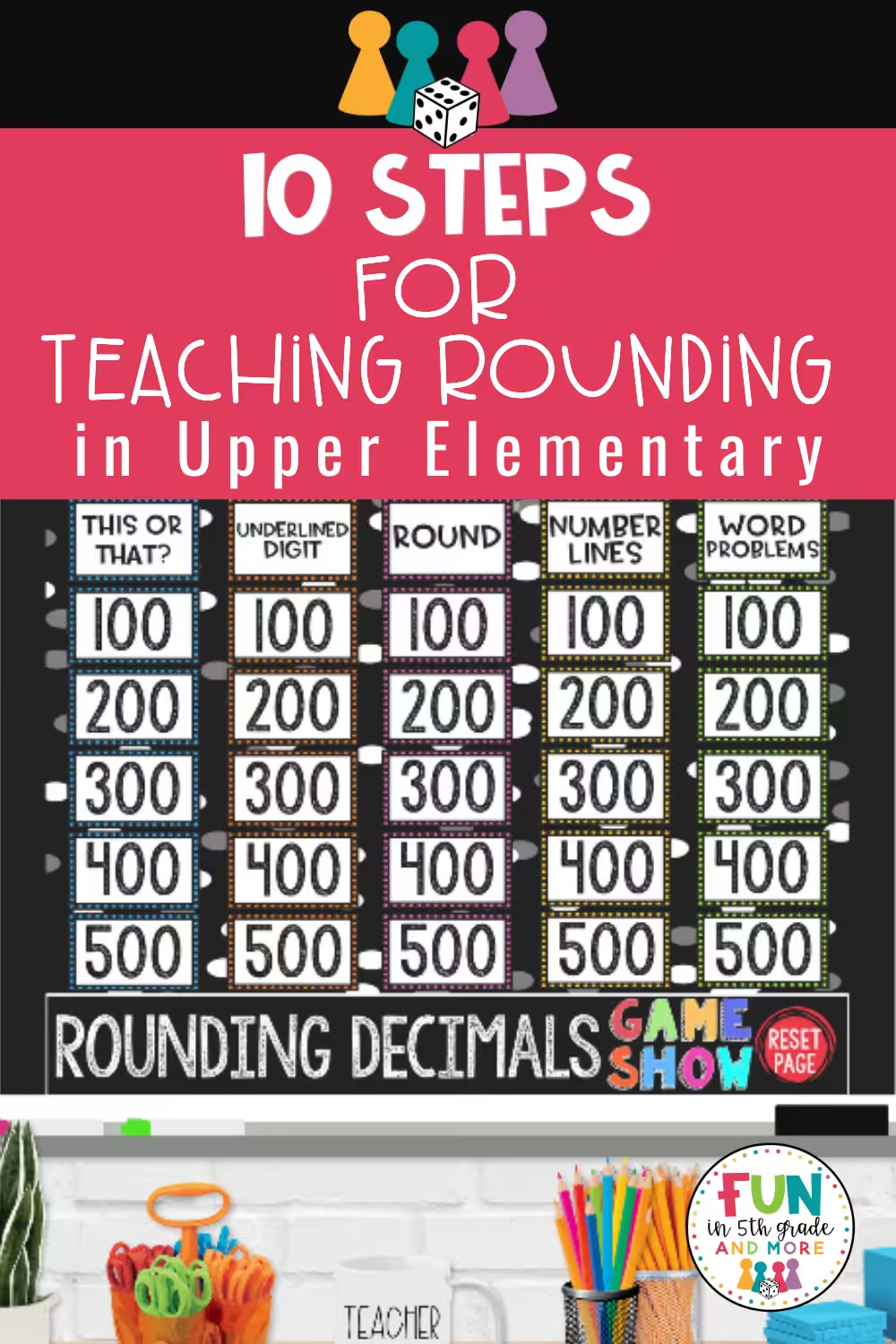
10 Steps for Teaching Rounding in Upper Elementary
Note: Although these are 10 steps for teaching rounding in upper elementary, some skills we discuss may not apply to younger grade levels. Skip steps as needed to focus on just the parts your students need to fulfill their curricular expectations.
Step #1 | Introduction to Rounding Numbers
First, spend some time defining rounding numbers. Then, discuss the importance of rounding in real-life situations. You can use some of the examples I gave above or some from the list below.
Rounding in real life
- shopping
- time management
- estimating costs
- travel distance
- grades
- number of guests
- amount of food needed
After students have heard the examples and maybe have even come up with some of their own, take some time to explain the concept of place value and its relevance to rounding.
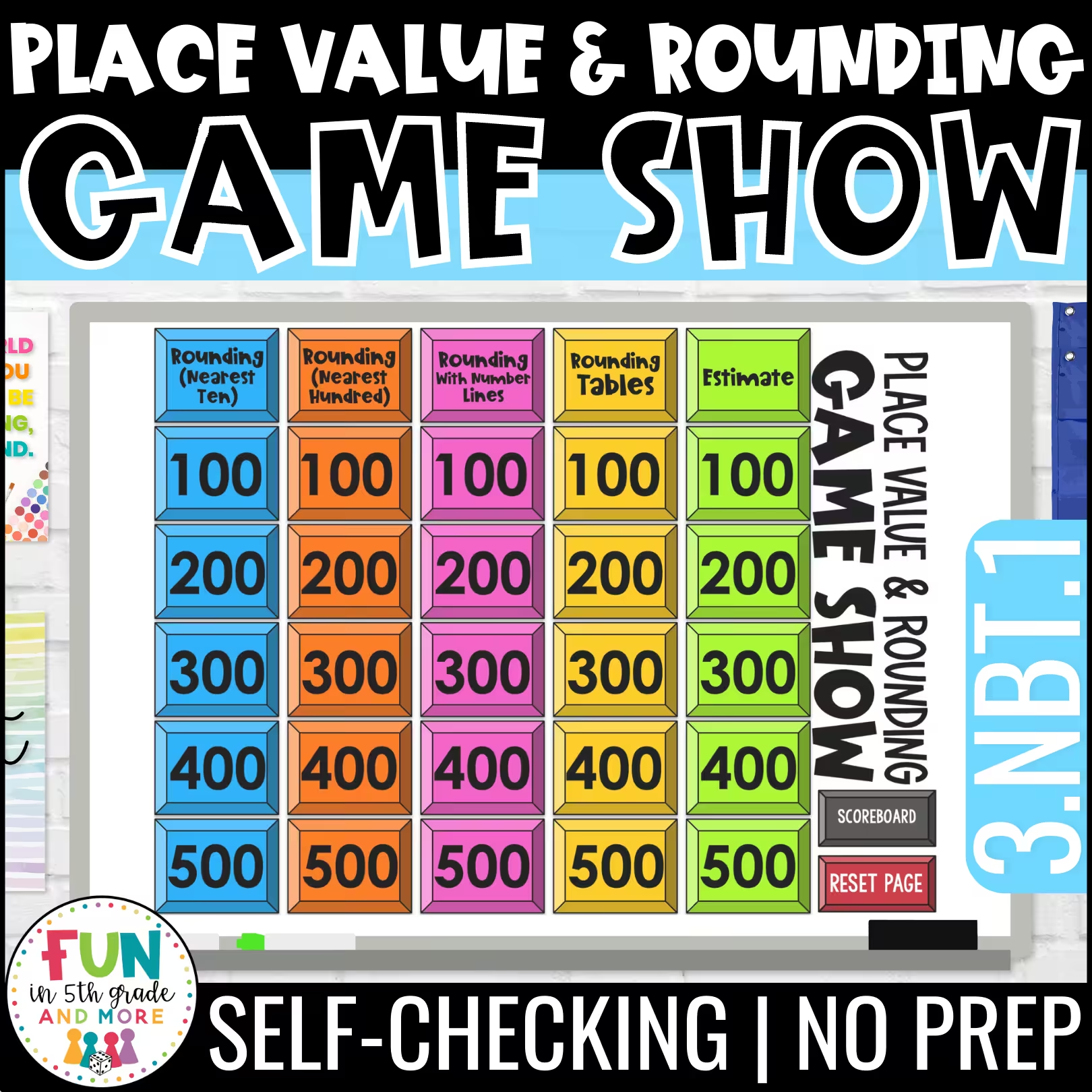
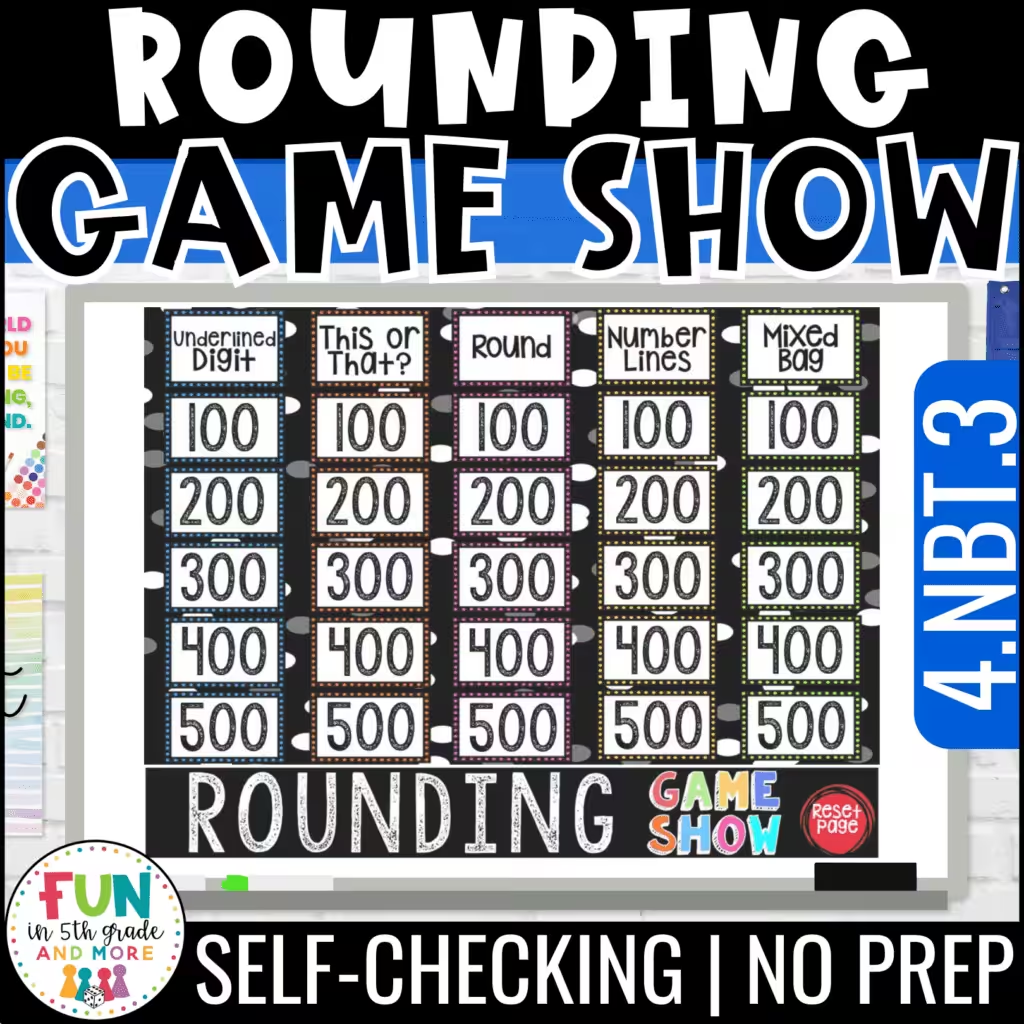
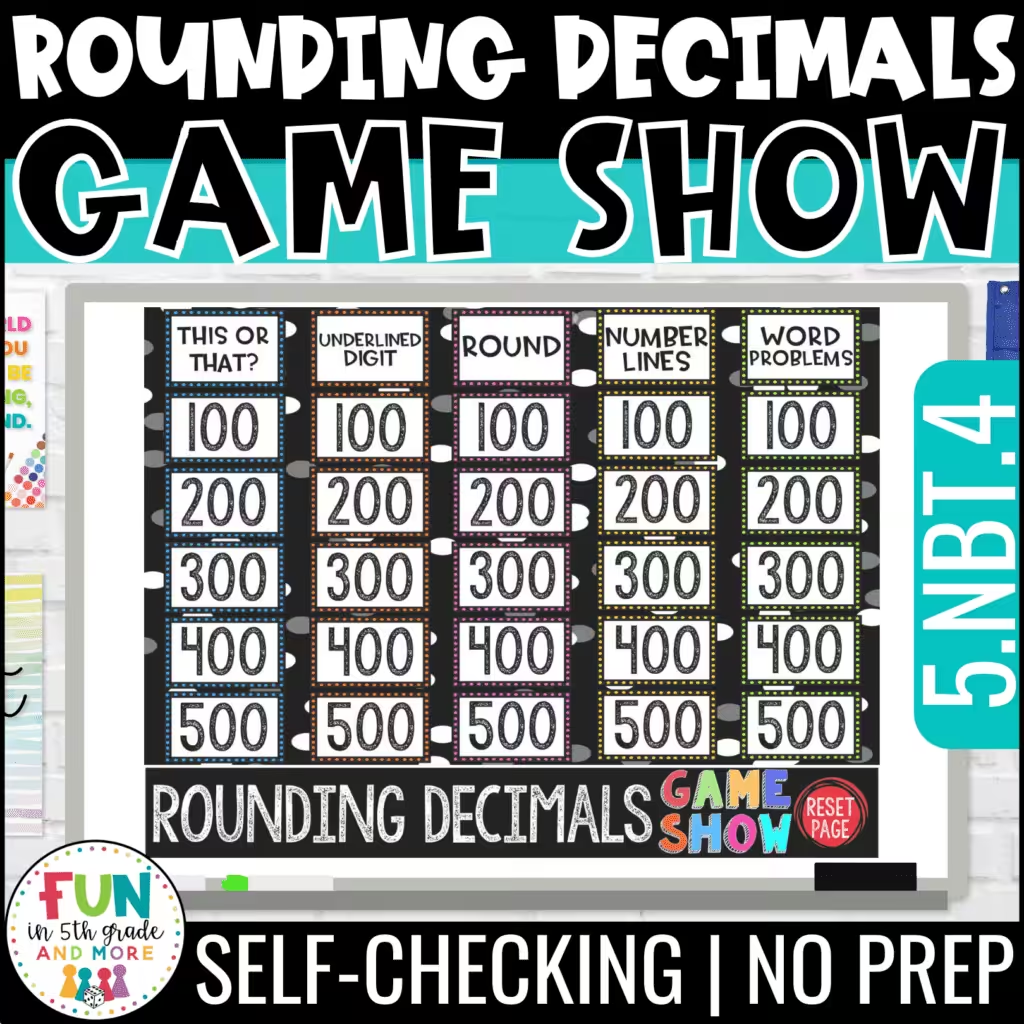
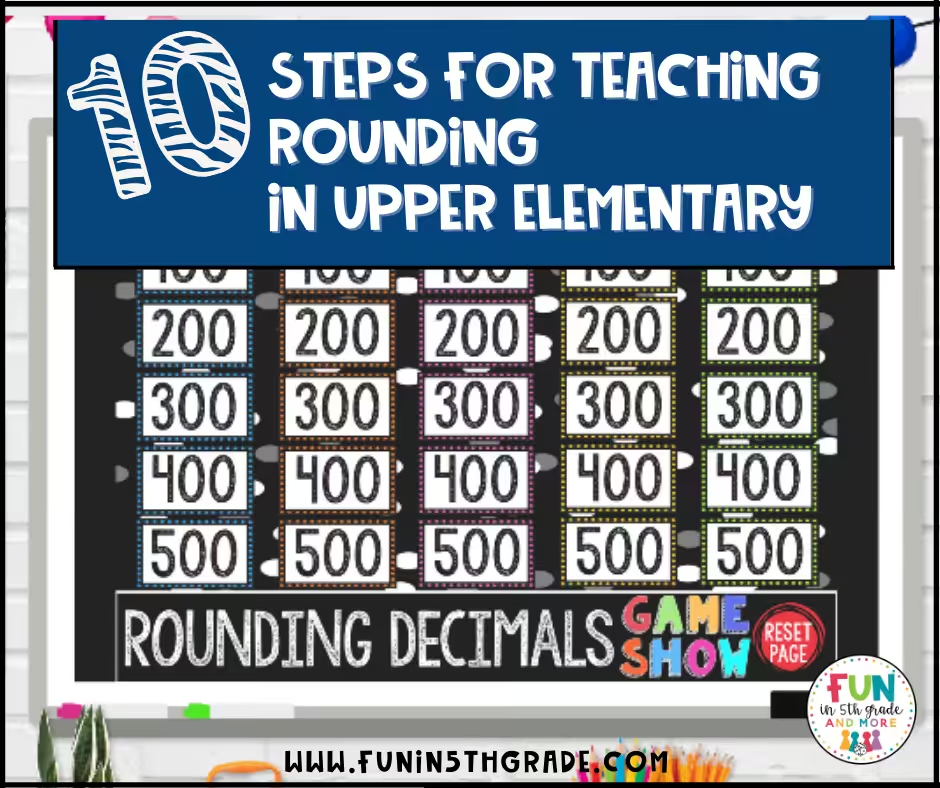
When first introducing rounding, you may find whole-group game show-style resources helpful as you pre-assess and begin to help students build up some experience related to rounding.
Click the links below to learn more about our 3rd, 4th, and 5th grade Rounding Game Shows. Each is designed to be appropriate for the grade level listed, but you can also use the others to help accommodate your students’ current understanding of rounding.
- 3rd grade game show
- 4th grade game show
- 5th grade game show (with decimals)
Step #2 | Rounding Whole Numbers
Once students understand why we round and have been introduced to the basic concept of rounding, it’s time to discuss the rules for rounding whole numbers.
Start by rounding to tens. Working with tens is something students have been doing since early on in their education, so they should be able to round to the tens space pretty quickly.
Then, as they wrap their minds around that, start adding in hundreds and thousands.
Offer tips and strategies to help students to understand the rounding rules. This may also be a good time to make some charts to hang in the room or create some flipbooks students can use as a reference when rounding to these larger whole numbers.
Step #3 | Rounding Decimals
Next, we’ll start bringing in decimals (if appropriate for your grade).
As you begin to explain the process of rounding decimals, discuss rounding to the nearest whole number, tenth, and hundredth.
Provide real-world examples where rounding decimals is useful.
One of the easiest ways to do this is with shopping.
Activity Idea: Put out 5-10 grocery items and their actual grocery store prices on desks on one side of the room, and their “rounded up” prices on desks on the other side of the room. Have students race to match the items up with their rounded-up price.
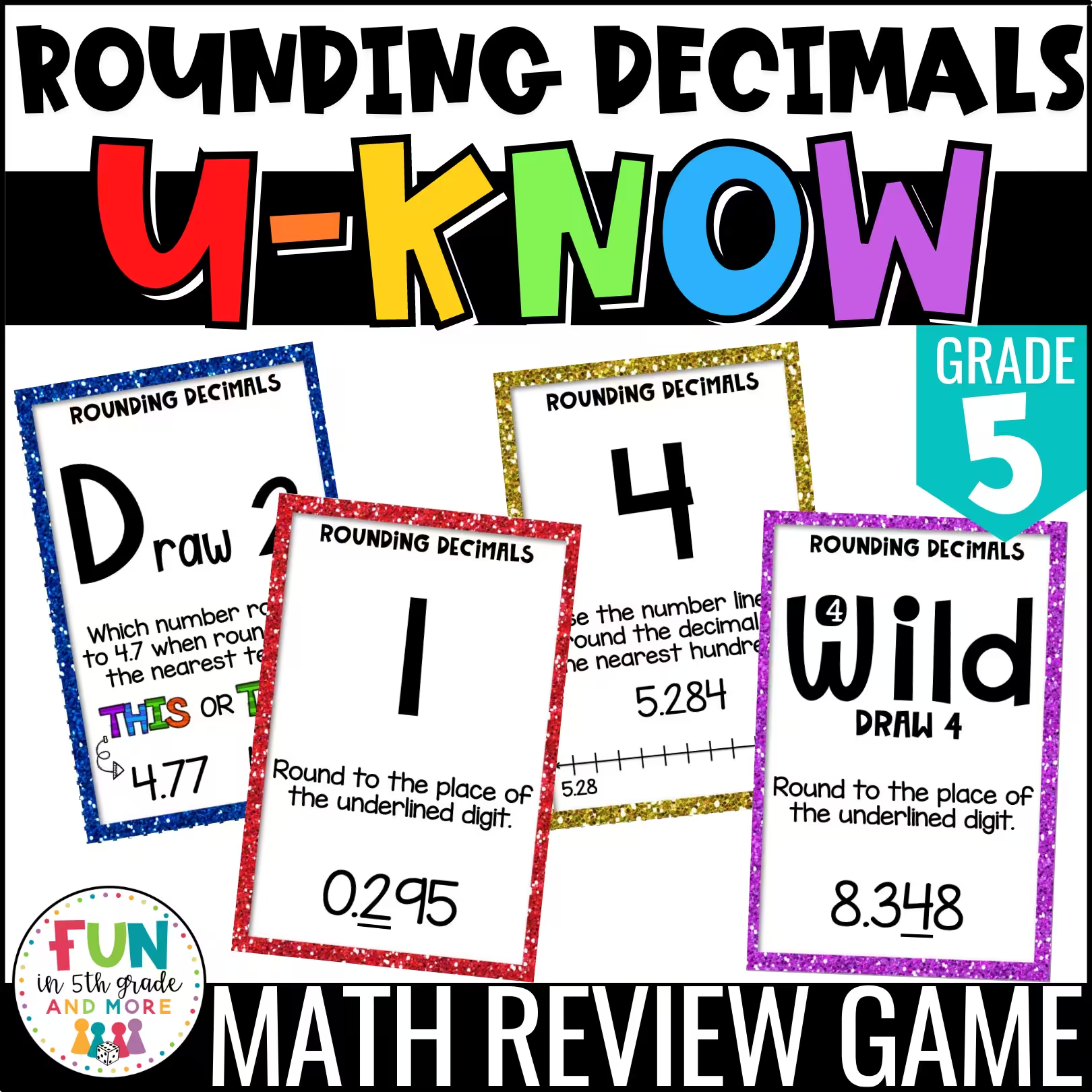
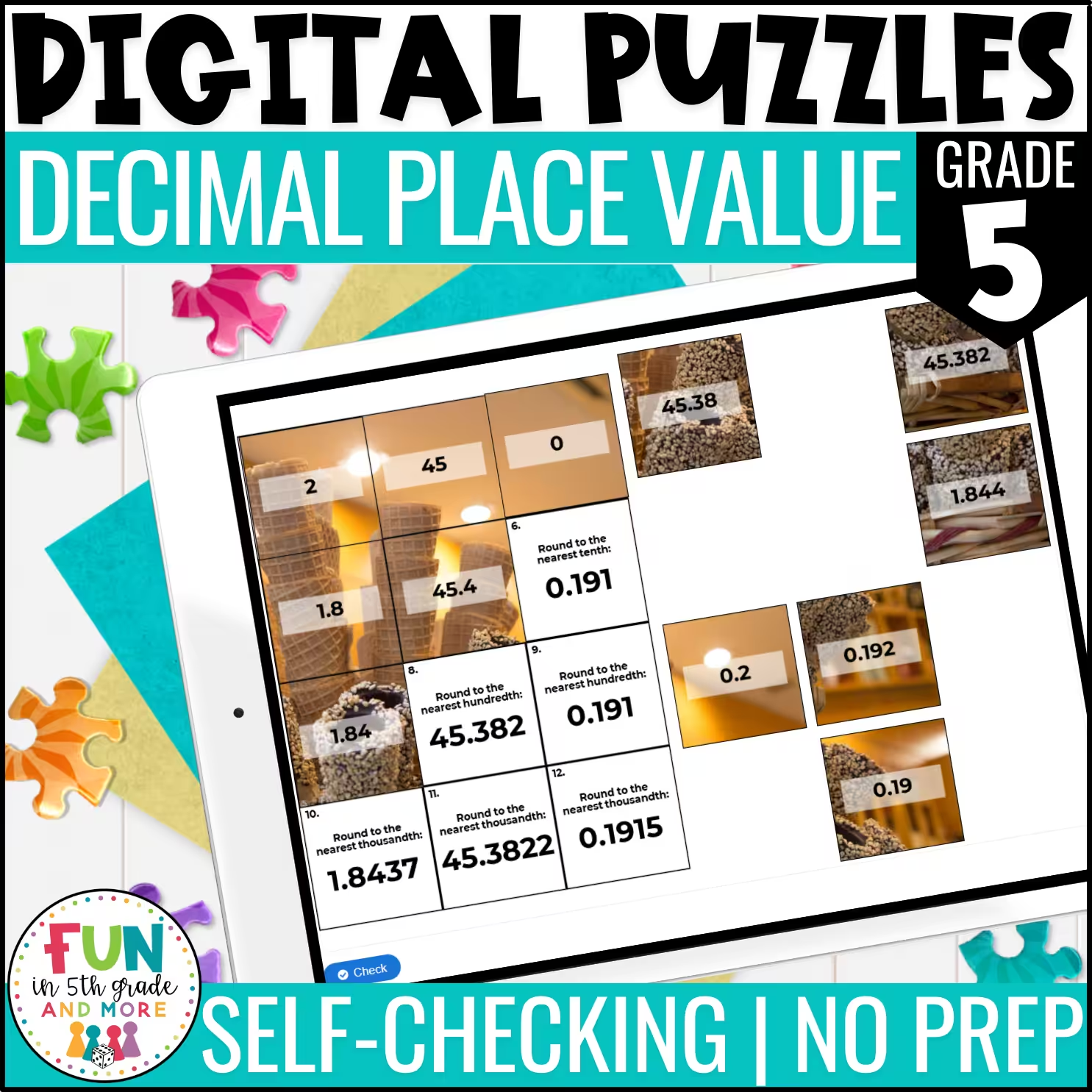
Here are a few additional resources that can also help students practice decimal rounding.
Step #4 | Estimation with Rounding
Rounding is probably most commonly used by adults in an effort to make estimations more accurate.
Explore how rounding can be used for estimation. Show examples of how rounding can help simplify complex calculations. Discuss the importance of estimation in problem-solving.
Put students in some situations where they might have to estimate a total based on quickly rounding numbers.
There are some good examples of this type of rounding practice in this Game Show!
Step #5 | Common Rounding Mistakes
Next, identify common errors students make when rounding numbers. (i.e., rounding to the wrong digit, rounding down instead of up or up instead of down, paying attention to the wrong decimal point, etc.) Keep a list of common mistakes you see with your students as you introduce and practice decimals early on.
Offer strategies for correcting these mistakes and do some practice exercises to reinforce learning and specifically combat these errors.
Step #6 | Rounding in Different Contexts
The next of the 10 steps for teaching rounding in upper elementary is to explore how rounding is used in different fields such as science, finance, and engineering. Discuss why precision matters in specific contexts and how rounding can affect outcomes.
Find specific examples or invite a guest to discuss how these industries use rounding. This may be a better lesson for 5th graders than for 3rd graders, but it can still be interesting for all, and inviting guest experts tends to make the real-life application more real for students.
Step #7 | Interactive Rounding Activities
As with all skills, the more time students can spend practicing and reviewing different kinds of rounding, the better.
Rounding activities tend to be quick for students to complete, making them good transition activities or exit tickets.
For example, you can print off the slides in one of the Game Shows and use them as task cards that students can use for practice, or you can use the Game Show as a station during your math block.
Digital puzzles like the ones listed below are also great self-checking math block practice! Read this blog post to learn more about how to set up an effective math block!
- 4th grade Puzzles-Whole Number Rounding
- 5th Grade Puzzles-Decimal Rounding
- Rounding Review U-KNOW Game
- 5th Grade Rounding Decimals U-KNOW Game
Step #8 | Assessment and Feedback
As always, assessing students along the way and providing feedback is important. Assessments can be informal, like having students work through a digital puzzle or a Game Show as a group, but you’ll also want more formal assessments mixed in.
Including more self-checking resources in daily work and math blocks also helps to give students immediate feedback as they work.
Remember, when assessing, focus on just one level of rounding at a time. For example, assess them by rounding to tens, then hundreds, then thousands before moving on to decimals.
Step #9 | Rounding and Critical Thinking
Encourage students to think critically about when and why rounding is appropriate. Take some time to discuss scenarios where rounding may lead to errors and the importance of critical evaluation.
Step #10 | Spiral in Practice and Review
As you continue through the year, and even when you aren’t specifically focused on rounding, find places where you can spiral in practice and review rounding.
If you want to check out any of the resources in this post, you can take a closer look at our on-site store, or, if you prefer, you can shop around in our Fun in 5th Grade Tpt Store!