Make math more meaningful for students with these real-world applications for adding and subtracting whole numbers.
When are we ever going to use this?
As teachers, we’ve all heard this sentiment from students many times over, and despite all of our best efforts, our students often just end up leaving the conversation rolling their eyes or shrugging.
Today, we’re answering the question of “When are we going to use this?” by discussing how to make math meaningful for students.
We dug through our brains and came up with several real-world applications for adding and subtracting whole numbers.
Resources for Adding and Subtracting Whole Numbers
Before we talk about real-world applications for adding and subtracting whole numbers, let’s make sure that we have some resources ready to go to use with students.
When we created these resources, we knew teachers would need resources for teaching, practicing, and reviewing these math skills.
We also believe that a big part of the math block in upper elementary is having good stations or centers for students to work through.
These resources were created to fill those needs and more!
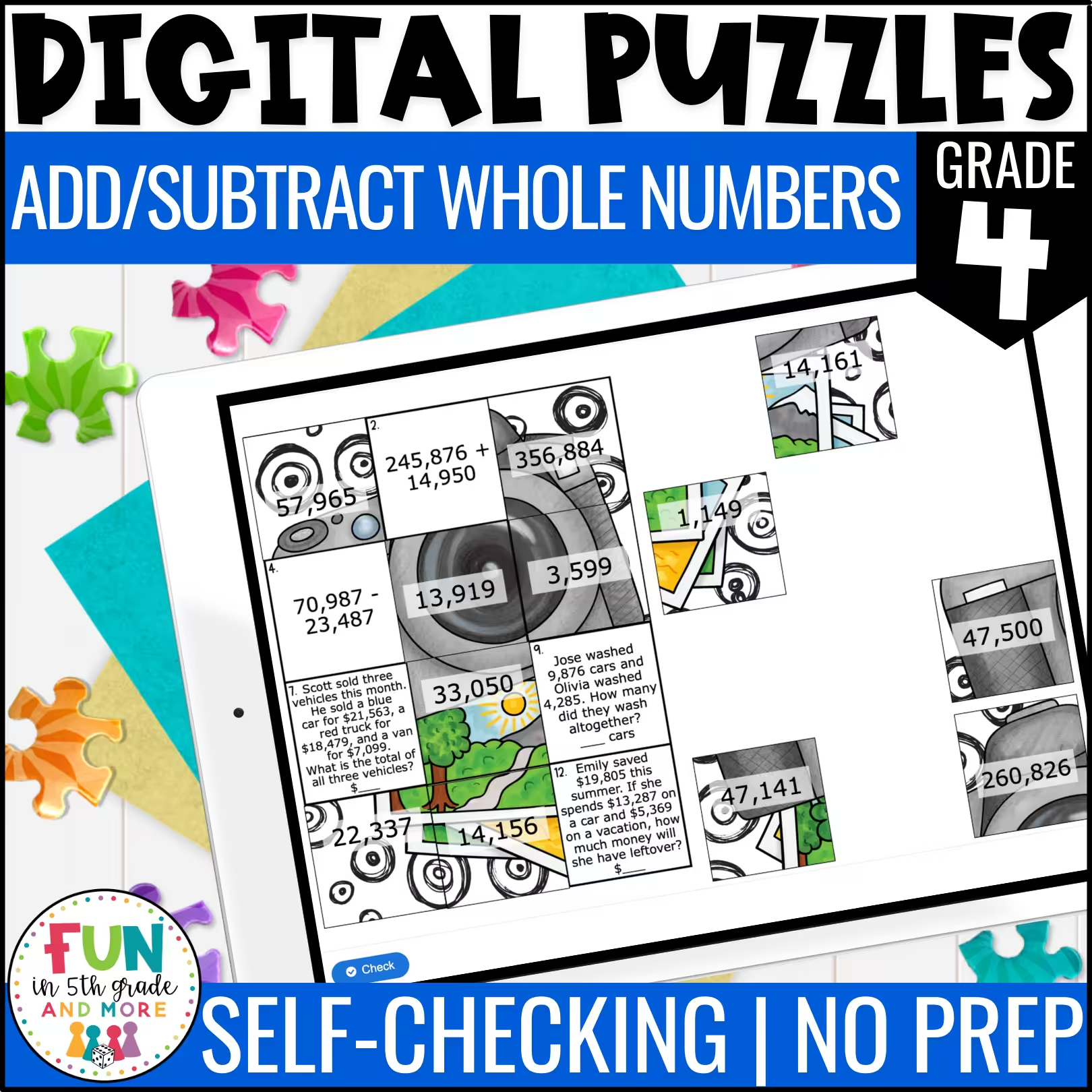
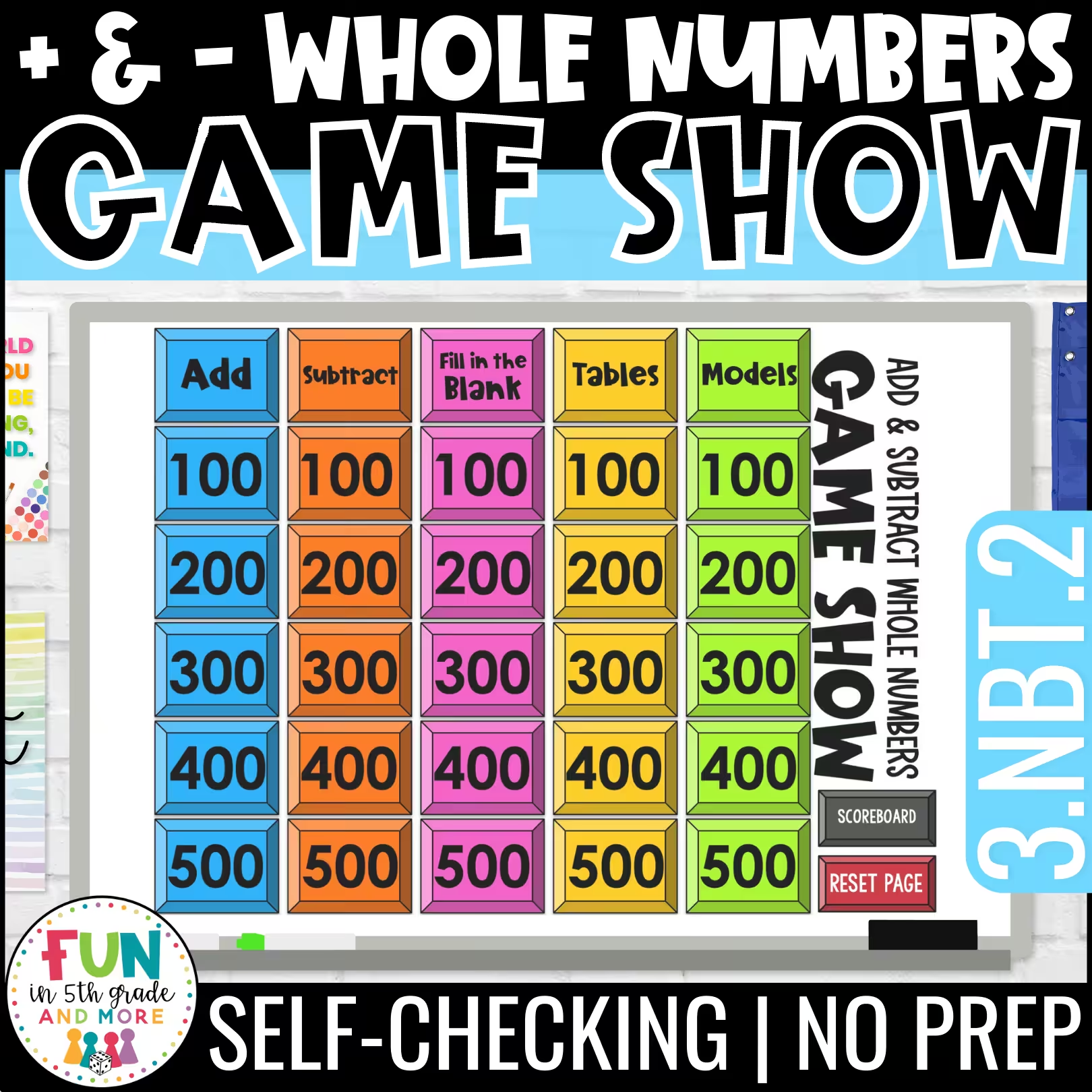
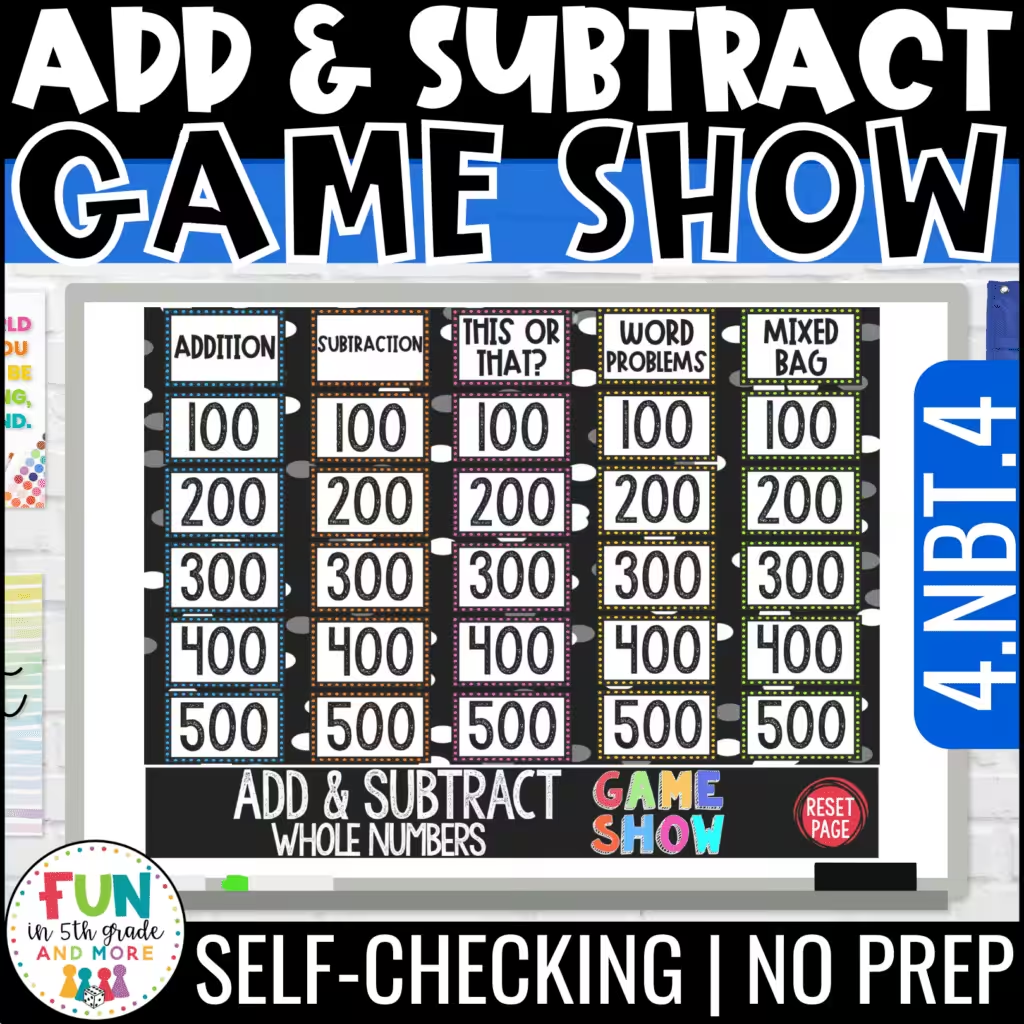
Click on the images below to learn more about our resources for adding and subtracting whole numbers.
Real-World Applications for Adding and Subtracting Whole Numbers
Grocery Shopping
Here are a couple of grocery store examples you can use with students to practice adding and subtracting whole numbers.
- Give students a budget and a list of grocery items with prices.
- Have them calculate the total cost of the items they would buy, adding prices together.
- Discuss how to stay within budget and how subtraction can help track spending.
Time Management
Time management is a great way to practice adding and subtracting whole numbers because the examples will hit close to home for students as they begin handling more responsibility in upper elementary.
- Create scenarios where students need to manage time for various activities.
- They can calculate how much time they have left after completing one activity (subtraction) or plan how long activities will take in total (addition).
Measurement and Construction
Construction and building things require a lot of adding and subtracting; therefore, it also offers a lot of opportunities and situations that can lead to great real-world applications for adding and subtracting whole numbers.
- Provide blueprints or diagrams where students must add or subtract measurements to determine the dimensions or materials needed for construction projects.
- Discuss practical applications like building a garden bed or constructing a birdhouse. At Christmas time, they may use a gingerbread house example.
Sports and Games
Many of your students will really love sports, so this category is one that you can use to help build connections with those students and give them a real-world application they will feel is important and interesting.
- Use scores from sports games or activities. I love working with the stats of current players (i.e., touchdowns of a beloved quarterback)
- Have students calculate the total points scored by a team (addition) or the points needed to catch up (subtraction).
- Discuss statistics and how they are used in sports analysis.
Budgeting and Financial Planning
- Give examples of budgeting for events or activities like a trip or a dinner out.
- Students can calculate total expenses (addition) and figure out how much money is left after subtracting expenses from a budget. To get a little more bang for your buck, combine this activity with a specific state or capital you’re learning about.
Travel
Traveling allows for many opportunities to add and subtract whole numbers, as you can work with the distance being traveled, the budget, or even the timing of different events and activities.
- Provide maps or travel itineraries so students can calculate the distances between locations (addition) or how far they’ve traveled (subtraction).
- Discuss units of measurement and practical applications like road trips or travel planning.
Inventory
These are oldies but goodies. I’m sure we’ve all heard about the guy buying 26 watermelons or the box of 36 oranges. Don’t let the examples get too ridiculous. Keep it real so that it connects with students.
- Create scenarios where students manage inventory in a store or warehouse.
- They can add quantities of items received (addition) or subtract items sold or used (subtraction) to update stock levels.
Temperature
The weather is an everyday experience for students, so bring it into your math lessons whenever possible!
- Use weather data where students calculate temperature changes over a period of time (addition or subtraction).
- Discuss practical implications like seasonal changes or daily temperature variations.
Time Zones
In our global economy, we deal with time zone differences more than ever. Bring those time zones into your adding and subtracting lessons as well!
- Explore time zones and calculate time differences between cities or countries (addition or subtraction).
- Discuss how these calculations are used in global communication and travel.
Event Planning
Whether they are planning an event in your classroom or just discussing a fictional event, making plans and figuring out how everything will work can be really fun for a lot of students. Again, this is something that will really connect with some students who like planning parties and gatherings for others!
- Create scenarios where students plan schedules for events or activities.
- They can add up durations of activities to create a timetable (addition) or subtract time to determine start or end times.
When we make math meaningful, we make it real for students (and memorable). Using real-world applications for adding and subtracting whole numbers will help students see more clearly how they will use their new skills later in life!
If you like the resources listed in this post, you can always find these and others in our on-site store, or, if you prefer, you can shop our TPT store as well!